All Categories
Featured
Traditional Infrastructure Versus Modern AI-Cloud Paradigms
The Comprehensive Artificial Intelligence Adoption Bluepr...
A Comprehensive Artificial Intelligence Adoption Blueprin...
Actionable Tips for Smooth Corporate Modernization
Table of Contents
Workplaces cleared over night, and what was indicated to be a momentary step ended up being a seismic shift. Remote work blurred into hybrid models, leaving leaders rushing to specify what "back to regular" even suggested. The Fantastic Resignation followed tens of countless workers rethinking their priorities, walking away from roles that no longer served them.
Values alignment wasn't a perk; it was table stakes. Companies responded with progressive policies, lavish signing benefits, and culture-driven retention methods. As economic uncertainty grew, the power pendulum swung back. Return to Office struck back while rolling layoffs advised workers that security was never guaranteed and companies aren't families, it's company.
We are now handling a multi-generational workforce with drastically various meanings of success, navigating leadership obstacles in real time, and rewriting the social contract of work as we go, all against the background of AI and a Wall Street/Shareholder/CEO-driven movement promoting severe efficiency and a "do more with less" required.
The world order itself has moved. At the same time, AI has actually quietly woven itself into our individual lives.
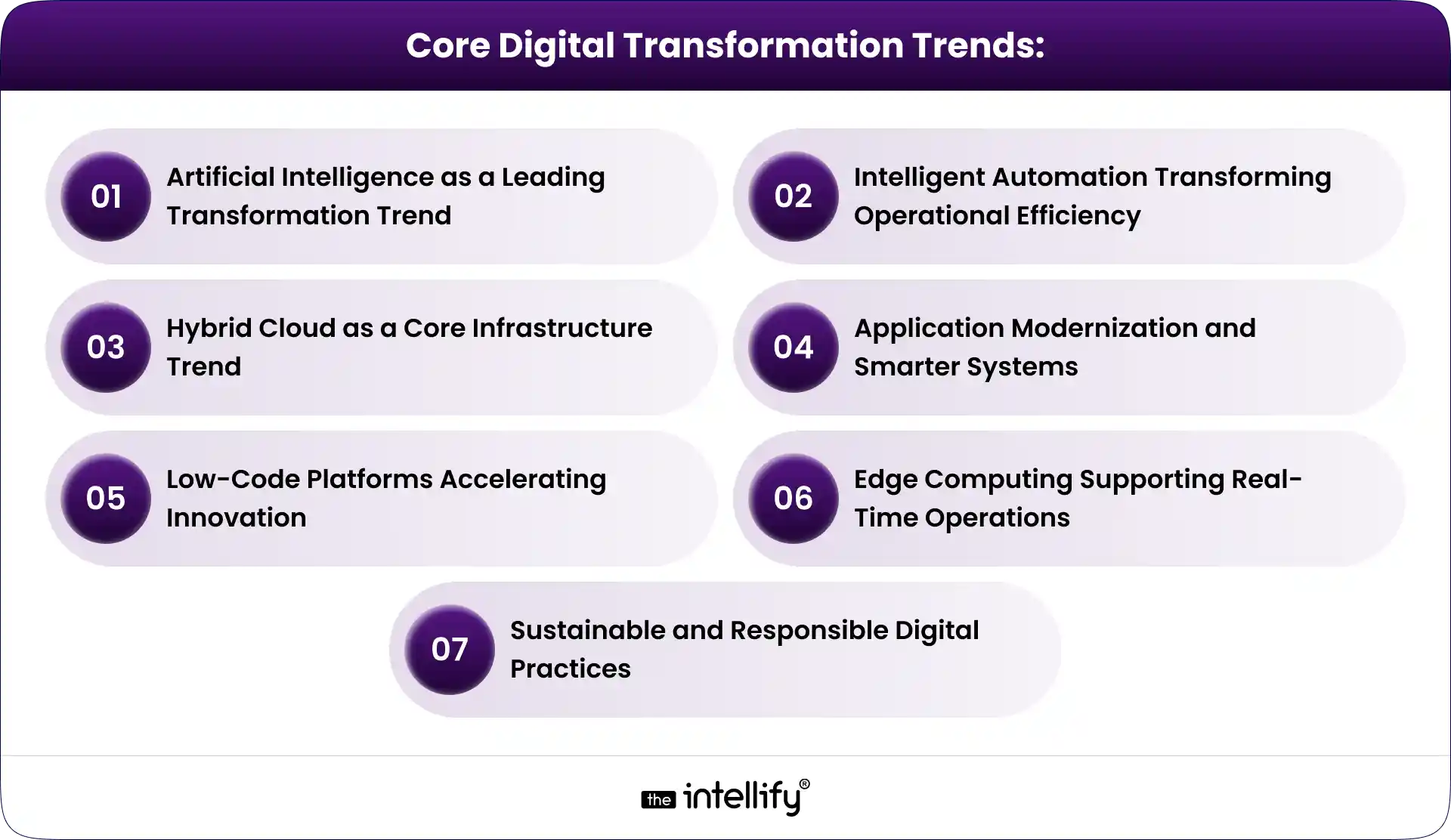
Exploring the Future of Business Technology: Key Trends
Chatbots like ChatGPT assist with everything from preparing emails to preparing getaways, leaving us concurrently surprised and uneasy. We're adjusting to AI without a cumulative discussion about what it suggests for identity, creativity, or connection. Inflation, an affordability crisis, and a general sense that post-pandemic life feels "various" even if we can't quite put a finger on why.
The ground beneath us never rather settles, and unpredictability has actually ended up being a standard condition we're finding out to deal with. Then there's technology the accelerant in this "no normal" age. The surge of generative AI in late 2022 felt like a switch flipping over night. Suddenly, anybody could produce images, code, essays, or service plans with a few prompts.
This acceleration has actually sustained a wave of brand-new AI-native companies emerging unicorns like Lovable are rethinking product style with "vibe coding" and other AI-enabled approaches. The environments around these tools have actually matured just as rapidly. GitHub, when a niche platform for developers, is now the backbone of open-source collaboration, powering AI improvements at scale.
It moves in loops iterating, compounding, and spawning new platforms quicker than services and societies can adjust. AI Automation and enhancement are no longer theoretical.
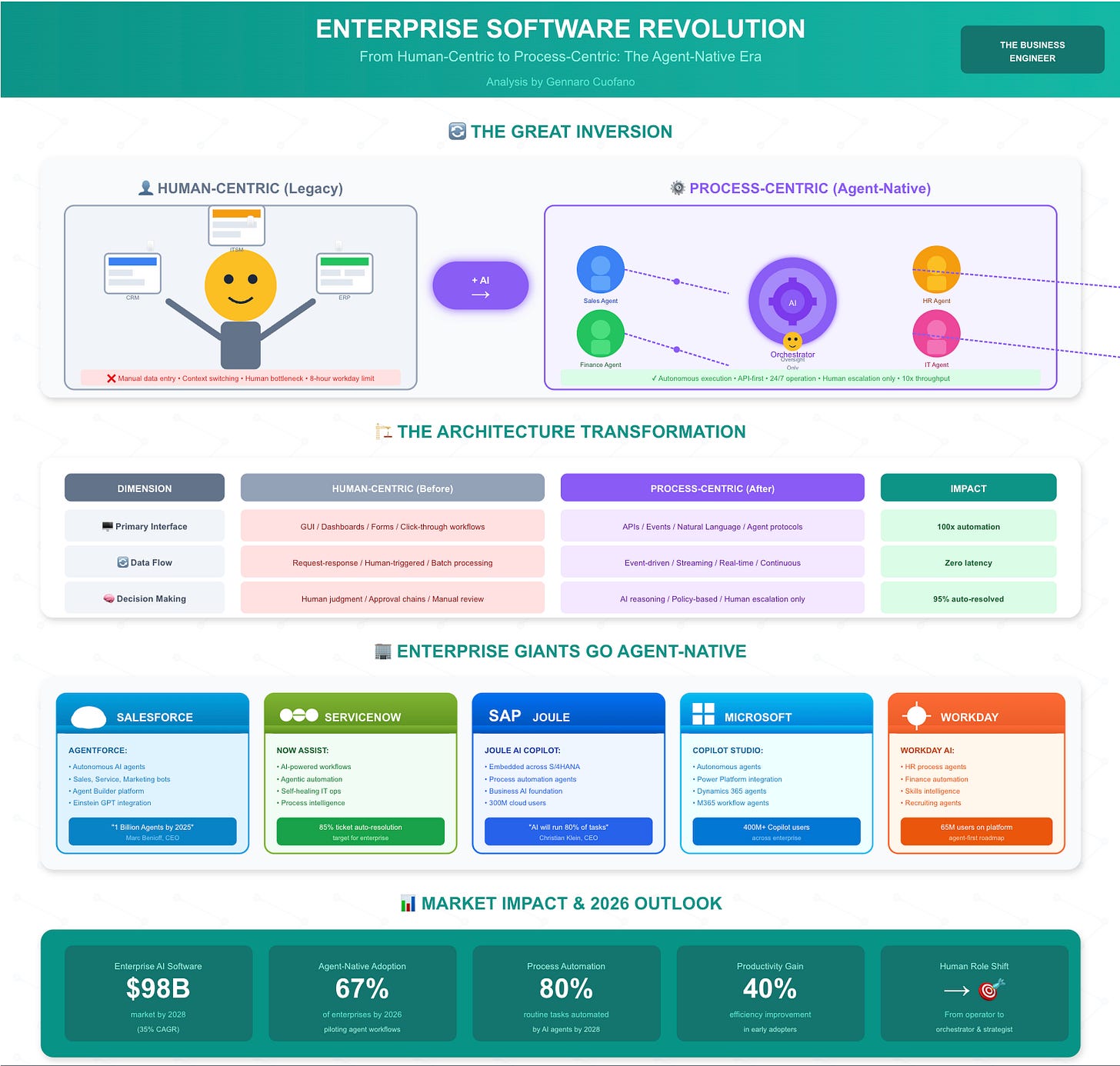
Under the surface area, brand-new patterns have actually taken shape. If we zoom out, these patterns point towards six shifts already forming in the near distance: Press enter or click to see image completely sizeIn his timely and revolutionary book, Academic Ethan Mollick framed the generative AI transformation as "co-intelligence" human beings and AI working together, each enhancing the other.
Strategic Planning for the 2026 AI-Cloud Evolution
The shift over the next six years is less philosophical and more behavioral: we start to need AI to operate at work and in everyday life. Right now, that reliance is already visible in the numbers. Microsoft's latest Future of Work research study shows that almost a third of information employees use generative AI several times a week, and that Copilot users lean on it for high-complexity tasks at nearly three times the rate of traditional search.
And let's not forget humanity. Lots of workers are concealing their usage of AI either since of perception or company governance. An Anthropic research study found that the majority of workers utilize AI at work, but 69% are actively hiding their use of it. The pattern looks familiar. We used GPS as a useful tool, then many of us forgot how to read a map.
The work still gets done, however the scaffolding shifts from human memory and skill to a human-AI loop. This "GPS effect" waterfalls through the coming representative economy: AI not simply as a tool on your desktop, however as a swarm of agents acting on your behalf, end to end. Co-intelligence becomes co-dependence once those representatives are wired into whatever: your calendar, your CRM, your monetary systems, your kid's school website.
Key Benefits of Enterprise Modernization for 2026
AI handles the rest. AI needs human beings to exist, and we need AI to function.
Inside business, AI is beginning to sculpt up what used to be full-time tasks into job portfolios., revealing that many occupations are clusters of AI-addressable jobs rather than indivisible roles.
Artificial intelligence can do the work currently performed by almost 12% of America's labor force, according to a current from the Massachusetts Institute of Innovation. Think fractional CMOs, contract information scientists, part-time item leaders, gig-based UX teams, and AI-augmented copywriters offering their time in pieces to several customers.
Employees get flexibility AND fragility at the exact same time. The social contract of full-time white-collar work shifts from "we'll take care of you" to "we'll provide you a platform." Historically, pensions were replaced by 401(k)s; the next phase changes task titles with individual operating systems and portable expert credibilities. It is with some irony that lots of late-stage career knowledge employees (with gray hair) are discovering themselves transitioning into gray-collar work after a layoff.
Boomers and Gen Xers who age out, Gen Zers who opt out, and even millennials who burn out are finding themselves in the gray-collar class, either by option or need. Press enter or click to view image completely sizeHigher ed is under pressure from 3 sides: AI in the classroom, fewer standard entry-level roles, and an intensifying trainee debt problem.
Optimizing ROI With Cloud-First AI Strategies
About 42.3 million Americans hold federal student loan financial obligation, with overall federal balances around $1.67 trillion and roughly $1.81 trillion when you include private loans. The Federal Reserve reports that for those who still owe cash for their own education, the typical financial obligation sits in between $20,000 and $24,999. Some customers, especially those in certain professions or with postgraduate degrees, carry balances balancing over $80,000. At the exact same time, policy around repayment keeps moving.
Department of Education's SAVE income-driven strategy, which enrolled roughly 7.7 million customers, is now being phased out after a legal obstacle, requiring those borrowers into less generous alternatives. That unpredictability just enhances suspicion from younger generations who already watched older brother or sisters or moms and dads struggle under loan burdens. Layer AI.

Table of Contents
Latest Posts
Traditional Infrastructure Versus Modern AI-Cloud Paradigms

The Comprehensive Artificial Intelligence Adoption Blueprint for Success
A Comprehensive Artificial Intelligence Adoption Blueprint for Success
Latest Posts
Traditional Infrastructure Versus Modern AI-Cloud Paradigms
The Comprehensive Artificial Intelligence Adoption Blueprint for Success
A Comprehensive Artificial Intelligence Adoption Blueprint for Success